
Rings
A lid-and-base paper box is one direction to explore. Define the presentation angle, band size and clearance above the setting.
Holder contact and closure must be checked with the actual ring.
Custom paper packaging for rings, earrings, necklaces and coordinated collections. Compare published product references, then choose the structure, holder and branding for your brief. YDP supplies rigid boxes and folding cartons made in China.
Production from 500 pieces · Mixed sizes and versions confirmed per project
Start with your jewelry. Add the details you know, then continue to your inquiry.
Use these guides to compare directions. Your selections above remain on this page.
How should it open?
Compare structuresHow will the jewelry sit and come out?
Plan jewelry fitWhere should your logo and paper finish appear?
Review brandingThese are starting points for custom development, not stocked products or tested sample specifications. Production starts at 500 pieces; quantities by size and version need review.
A lid-and-base paper box is one direction to explore. Define the presentation angle, band size and clearance above the setting.
Holder contact and closure must be checked with the actual ring.
Explore a folding carton with a card or a rigid box with a holder. Include the posts, backs, hooks or hoops as well as the visible front.
Check loading, removal and clearance behind the holder.
Explore a drawer or lid-and-base box. Include the spare chain, clasp and extender when planning the carrier and usable internal space.
Review both sides of the carrier and the complete removal sequence.
Plan a shared paper and logo direction, then list the pieces in each box and the quantity for each size or version.
A matching appearance does not mean every piece uses the same holder.
Have your own box or supplier reference? Describe what to retain and what to change. A photo helps explain the direction; dimensions and materials still need to be identified.
Explore these YDP projects to shortlist presentation and opening styles. Confirm current availability, dimensions, contact materials, pricing and fit for your own jewelry. Select a reference, then discuss the details or plan a physical sample.
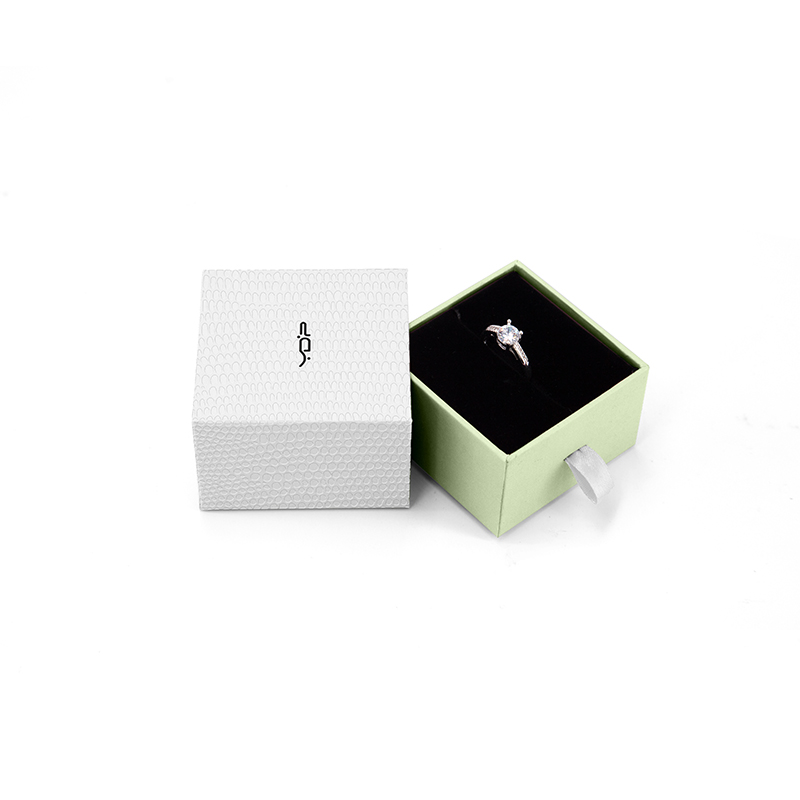
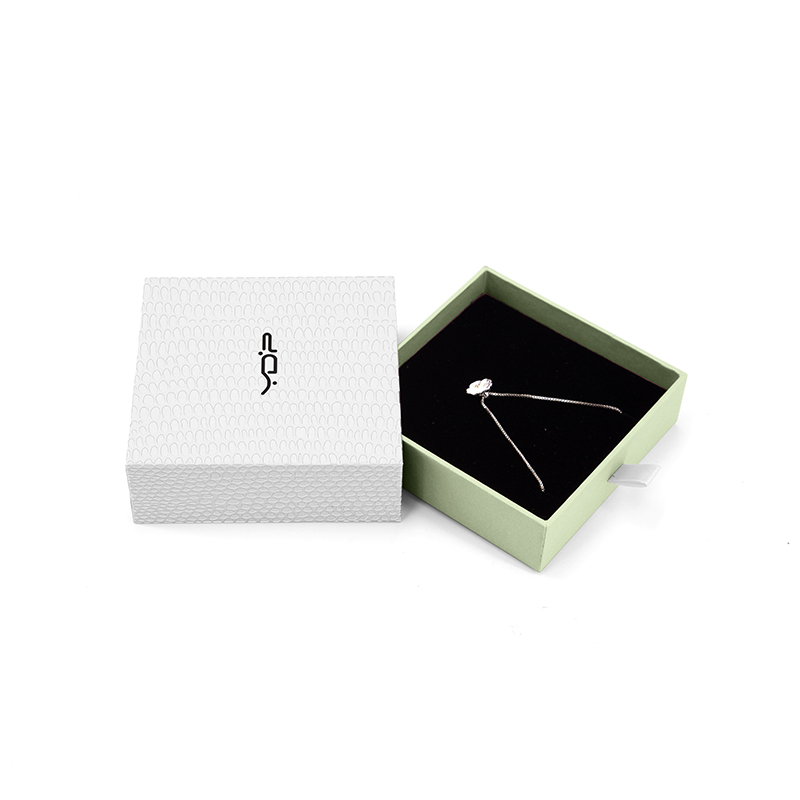
A textured outer sleeve, a contrasting tray and a ribbon pull. The catalog also shows a pendant version; each holder needs its own dimensions and review.
Structure: A white outer sleeve holds a contrasting green tray; a ribbon pull opens the drawer. A dark holder presents the jewelry.
Finish & branding: The sleeve has a repeating textured appearance and a dark logo. Specify the paper surface and logo method for your version.
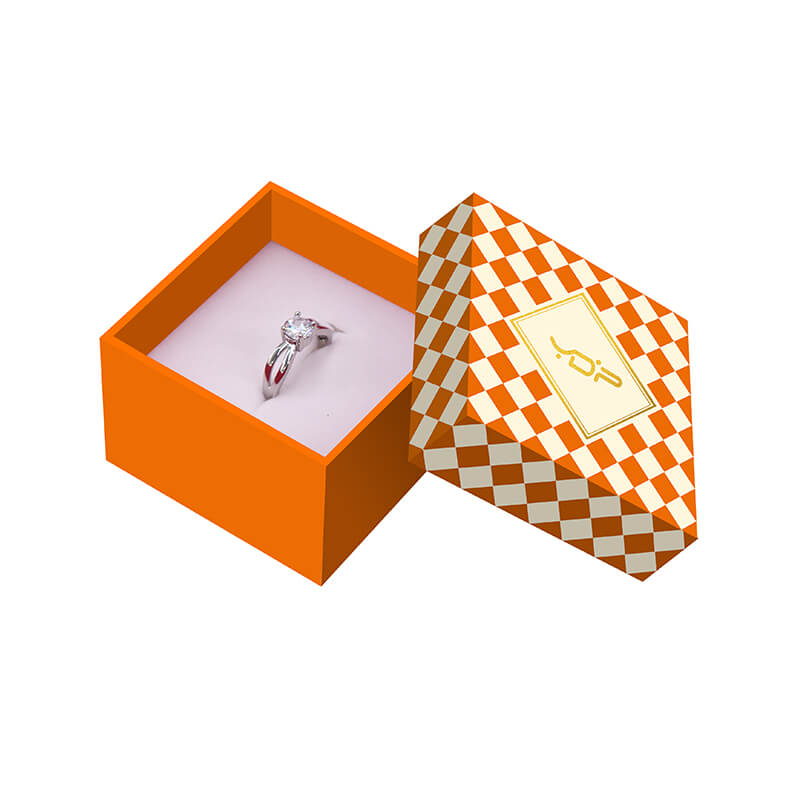
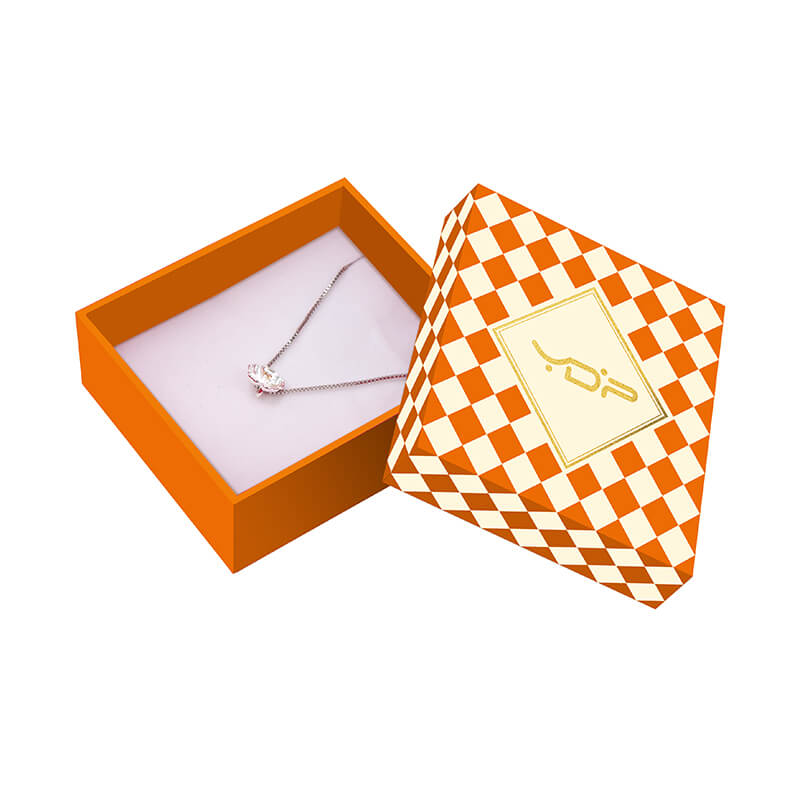
A separate lid, patterned outer paper and a ring presentation inside. Use this reference to discuss lid artwork, interior color and the holder; contact materials need identification.
Structure: A lift-off lid sits over an orange base with a light-colored jewelry holder. Separate ring and pendant presentations are shown.
Finish & branding: The lid combines a geometric pattern with a gold-colored logo area. Confirm the printing and logo process for your design.
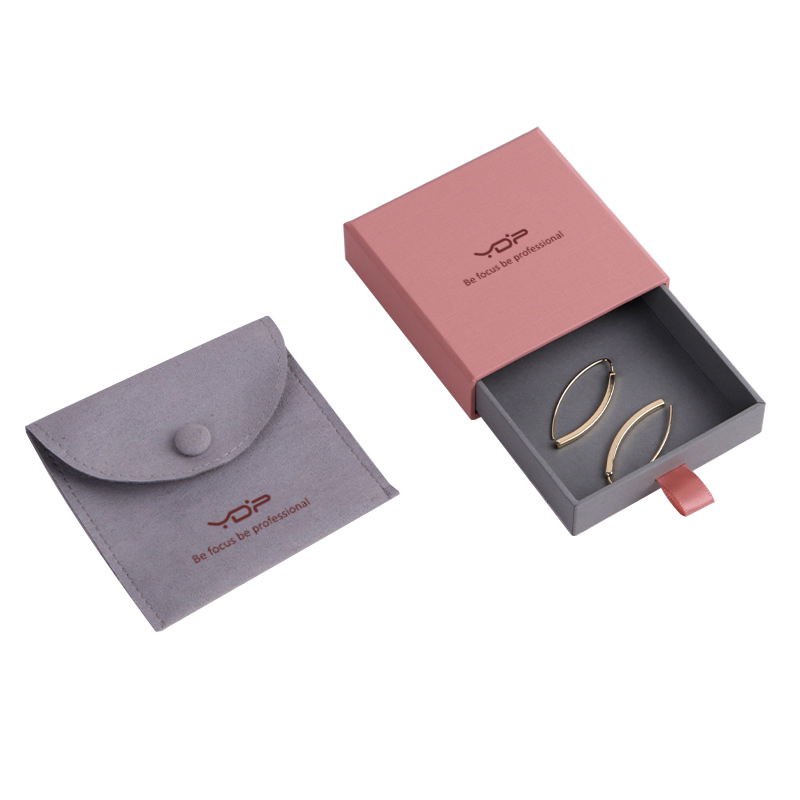
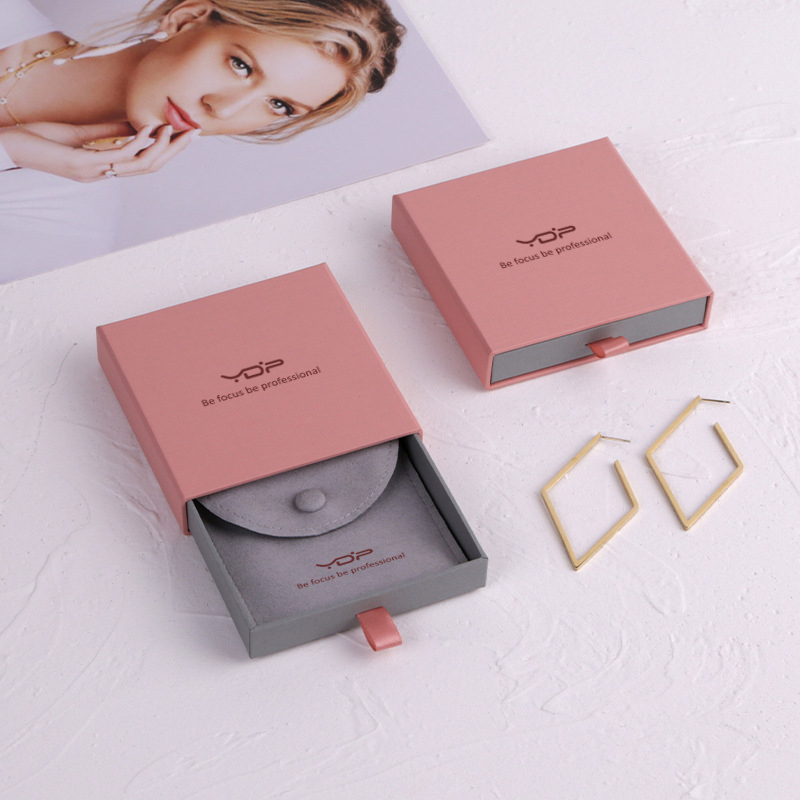
A pink sleeve, a grey drawer and a separate pouch. Discuss whether the jewelry will be supplied inside the pouch and which components and logo locations belong in the quote.
Structure: A pink sleeve surrounds a grey sliding tray with a ribbon pull. The separate pouch is shown inside the drawer.
Finish & branding: The project pairs colored box surfaces with a branded pouch. The original product description identifies a microfiber pouch; confirm material and logo process for your version.
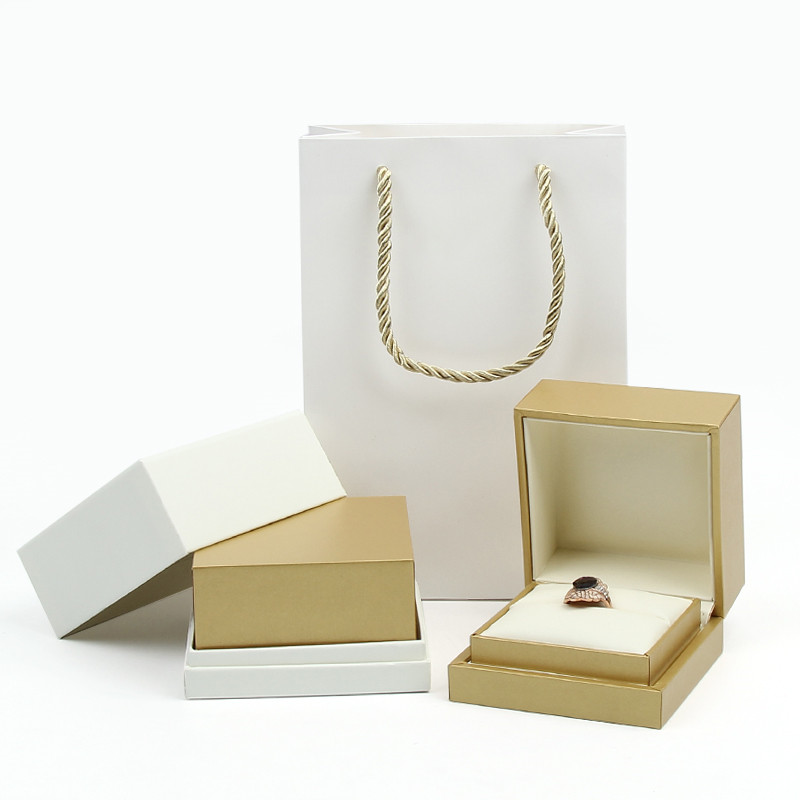
A ring box and shopping bag shown together. Discuss the box, holder and bag as separate components; inclusion and specifications require confirmation.
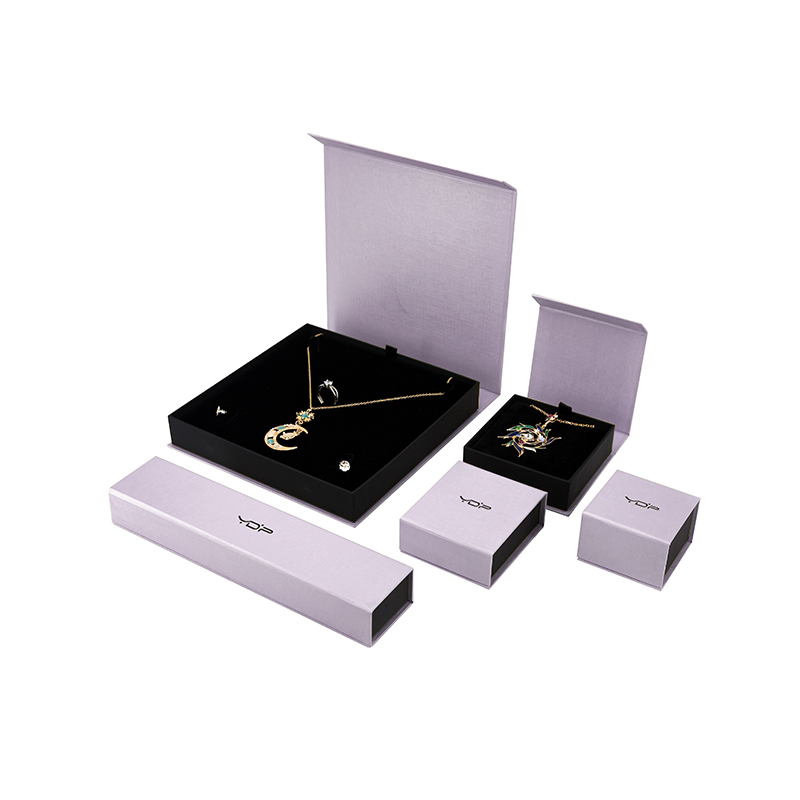
Purple book-style boxes shown in several formats. Discuss each holder, opening and jewelry size individually; fit is not demonstrated for your pieces.
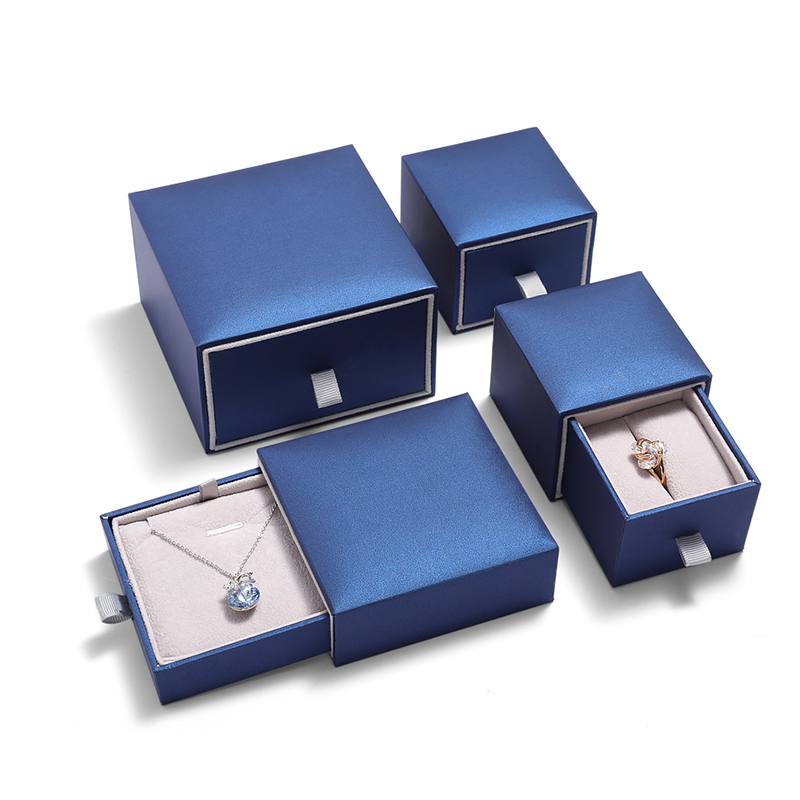
Blue drawer boxes shown with necklace and ring presentations. Confirm the holder and dimensions for each version before sampling.
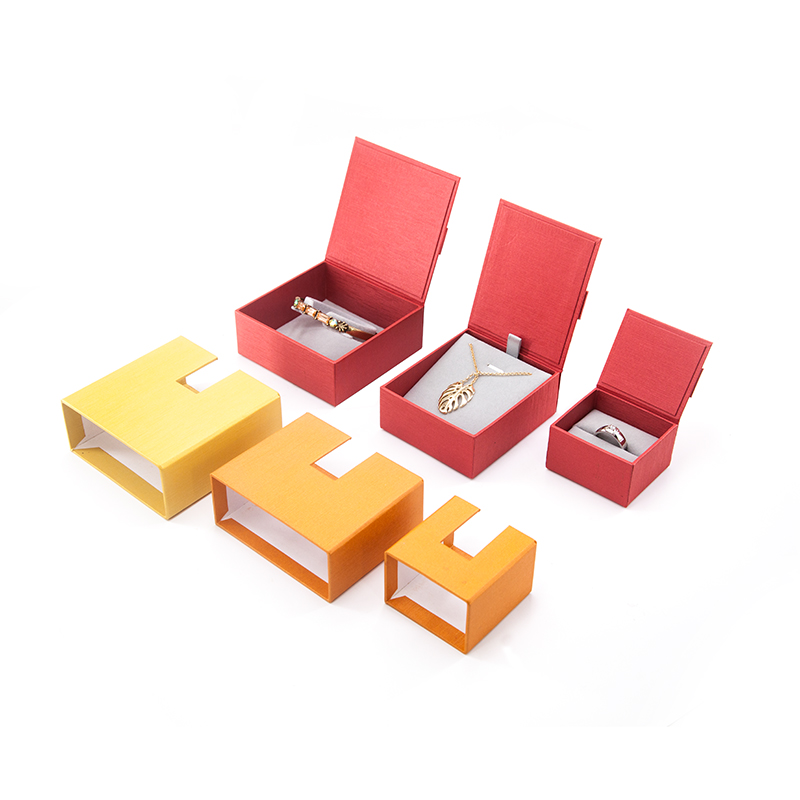
Three box sizes show bracelet, necklace and ring presentations. Discuss each holder, lid and dimensions separately for your collection.
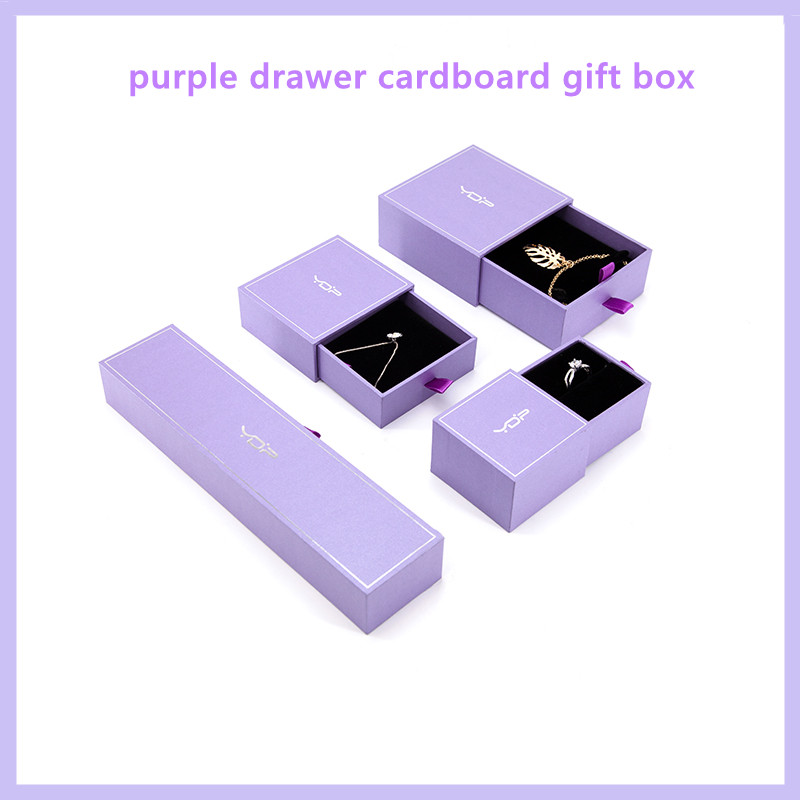
A family of drawer boxes with ribbon pulls and several jewelry presentations. Check chain routing, holder construction and removal on a physical sample.
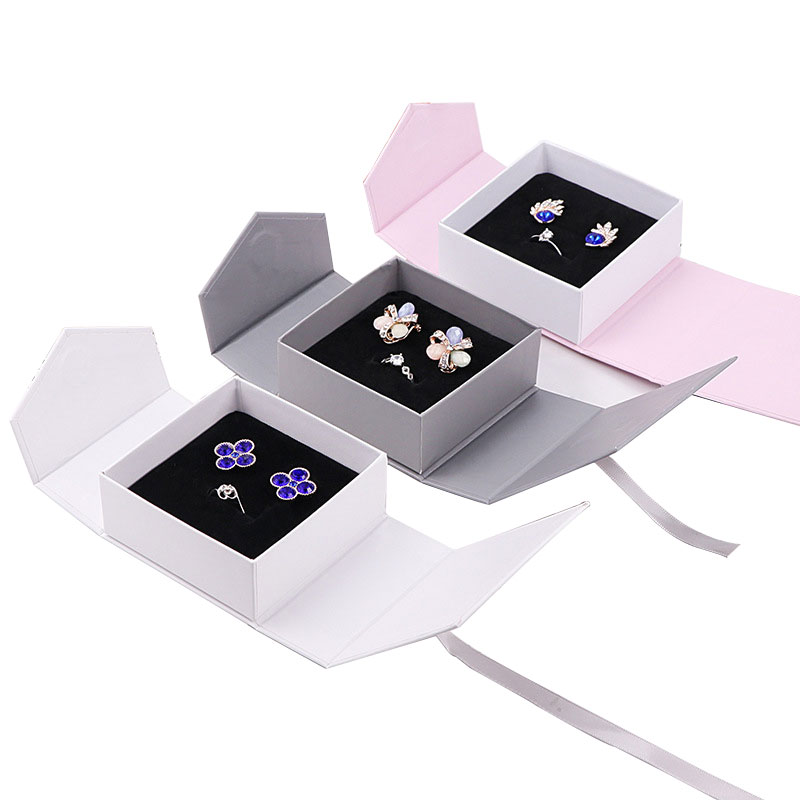
Several open boxes show earring and ring presentation against dark holders. Confirm the backing clearance, holder contact and closure for your own jewelry.
YDP project photographs. Confirm materials, dimensions, availability, sample scope and terms for your project. Jewelry shown is for presentation.
These YDP projects offer two more directions to discuss. W01 shows a watch on a cushion. B11 shows only the outside of closed boxes; request an interior view or sample before deciding. Use the references for a discussion, not as confirmed specifications.
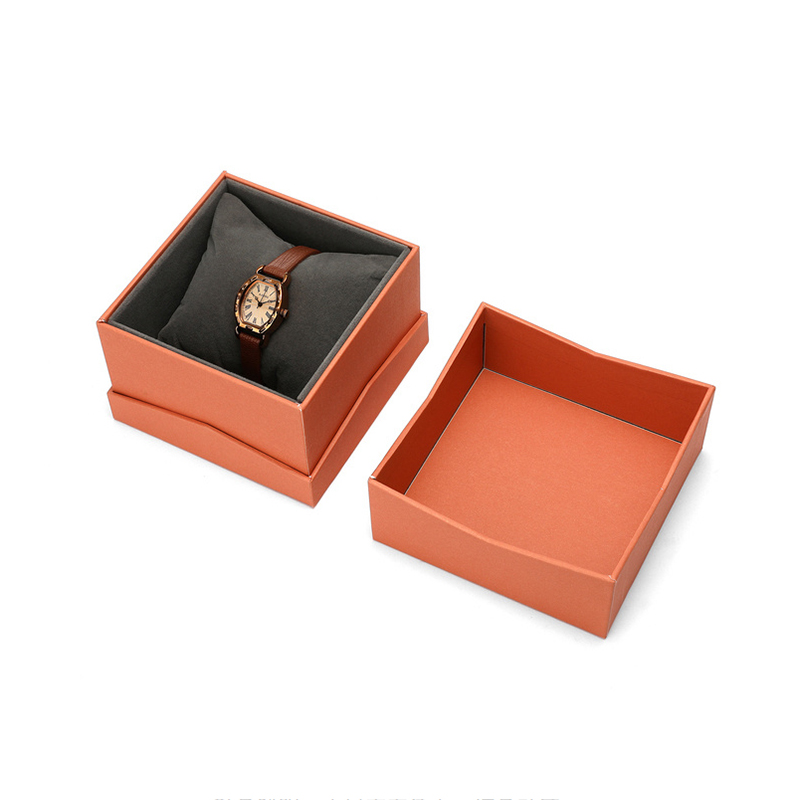
The image shows a watch on a cushion. Check cushion dimensions, strap circumference, closure clearance and removal with your watch; suitability and current availability are unverified.
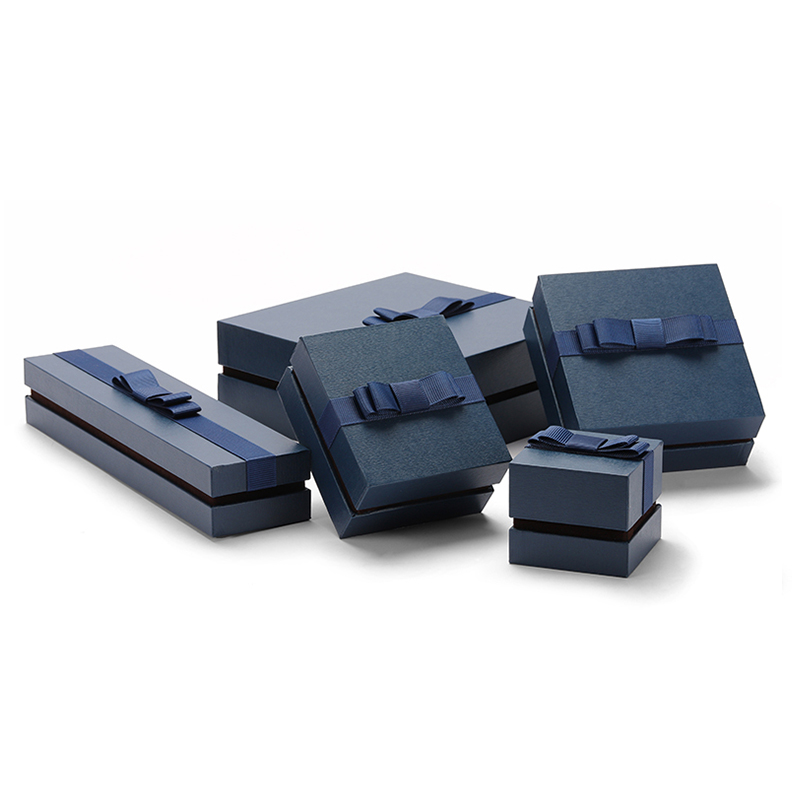
Several closed boxes with coordinated color and ribbon styling. Interior layouts, materials, sizes and whether ribbons are included are not shown or verified.
These are YDP project photographs. Confirm the material, dimensions, availability and sample terms for your project.
Continue with your selected jewelry type. You can change it in your brief.
Production starts at 500 pieces. For several sizes or designs, list each version’s quantity before asking for a price. You can also define the physical sample you need before requesting a full production quote.
Physical sample evidence pending
Swipe across the table to read every column.
| Jewelry | Details to include | Questions for the sample |
|---|---|---|
| Necklaces and pendants | Pendant dimensions, chain length and thickness, clasp size and surface finish | Where does the spare chain go? Can you load and remove the piece without pulling on it? |
| Earrings | Earring dimensions, posts or hooks, backs and intended pair arrangement | Is there clearance behind the holder? Can both pieces be removed as intended? |
| Rings | Band dimensions, setting height and intended presentation angle | Does the holder accommodate the band? Is there clearance above the setting when the lid closes? |
Explore YDP project photos in the examples section. Request a physical sample to review fit and materials for your own jewelry.
Project rules to confirm
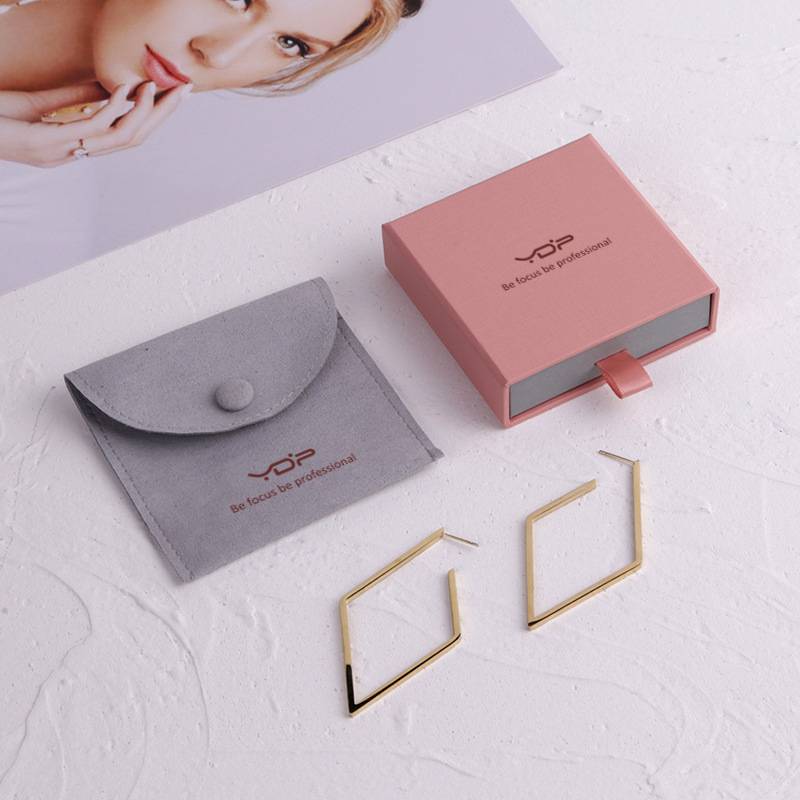
Box and pouch are shown separately. Agree logo locations on each component.
This catalog view shows the pouch placed inside. Confirm usable space and handling with your own jewelry.
Rigid boxes and folding cartons are part of YDP’s packaging range. Use the opening, jewelry holder and packing workflow to shortlist a structure before comparing finishes. The following are design considerations, not results from tested samples.
Swipe across the table to read every column.
| Direction | Choose it to explore | Resolve on the sample |
|---|---|---|
| Lid-and-base rigid box | Direct access from above and a removable lid. | Lid fit, space to set the lid aside, jewelry height and access around the holder. |
| Sleeve and drawer | A pull-out reveal with a carrier inside the drawer. | Forward opening space, pull attachment, loaded sliding clearance and access to the carrier. |
| Folding carton with a holder | A folded outer box around a card, pouch or dedicated jewelry support. | Who assembles it, how the holder is retained and clearance for posts, backs or a pendant. |
Project rules to confirm
This site focuses on custom production. A stock box with added printing is a different procurement route; YDP stock inventory and logo-on-stock service are not confirmed here.
If you have an existing box, share its internal dimensions and the changes you want. If you are starting from the jewelry, begin with the piece and its display position.
Swipe across the table to read every column.
| Approach | What to establish |
|---|---|
| Stock box with a logo | An existing box size and material with branding added. Confirm the available inventory and printing conditions. |
| Custom packaging based on an established structure | A familiar opening style with agreed dimensions, materials, artwork and insert requirements. Confirm which elements can change. |
| A new structural layout | A different box or insert layout developed around the product. Confirm feasibility, setup work and physical sample requirements. |
Project rules to confirm
A logo file alone does not define the finished result. Add its intended width, location and orientation, then name the desired print or finish effect. Ask for that effect to be reviewed on the proposed paper.
For a drawer box, identify whether branding is on the sleeve, drawer front or carrier. For a lid-and-base box, identify the lid face and the direction the logo should read when opened. These are specification choices, not claims that a finish has passed testing.
Keep the holder in the same specification: jewelry measurements, contact surfaces, retention points and the intended removal method. Insert-only supply is not a confirmed standard offering.
Separate the surface from the structure: a foil logo does not identify the paper, and a velvet-like image does not identify the contact material. For comparable proposals, specify the paper reference, logo size and position, finish, holder material and jewelry contact areas individually.
Deciding between two papers, logo finishes or contact layers? Compare them on a common baseline so you can identify what changed. Start with the decision below and edit the sample request to suit your jewelry.
Comparison planning guide — no physical comparison samples, measured results or price differences are published here.
Keep the same
Board, panel size, artwork, lighting and camera position.
Review
Compare labelled swatches for texture and appearance. Use a wrapped sample to review corners, folds and the finished box.
Keep the same
Paper, logo artwork, physical logo size and position.
Review
Compare edge definition, small text and appearance at different angles. Agree which processes can be sampled.
Keep the same
Box, jewelry and holder geometry, where feasible.
Review
Record contact points, clearance and removal. If thickness or layout also changes, record those variables separately.
Start with labelled swatches or finish panels for appearance questions. Request an assembled box and holder for fit and handling. Sample availability and terms need confirmation; appearance does not establish contact safety, anti-tarnish or shipping performance.
Production starts at 500 pieces. Sales confirms how the minimum applies to different sizes, artwork, colors and insert versions.
This website presents custom production, not a live stock catalogue. If you need logo printing on stocked boxes, ask whether a suitable size, material and quantity are actually available before planning around that route.
Send the dimensions and quantity for each. Matching appearance, available structures and mixed-size order requirements must be confirmed for the collection.
Describe the box, insert, logo and finishes you want included. Sales confirms available sample scope, charges, revisions and timing.
Timing is confirmed for the specific order. Include your destination and target arrival date; neither is a confirmed delivery commitment.
Tell us what you sell and what you need to decide.
Dimensions and artwork can follow.
Production from 500 pieces.
Sample scope and mixed versions confirmed separately.